Ocracoke Inlet Is Not Deep Water
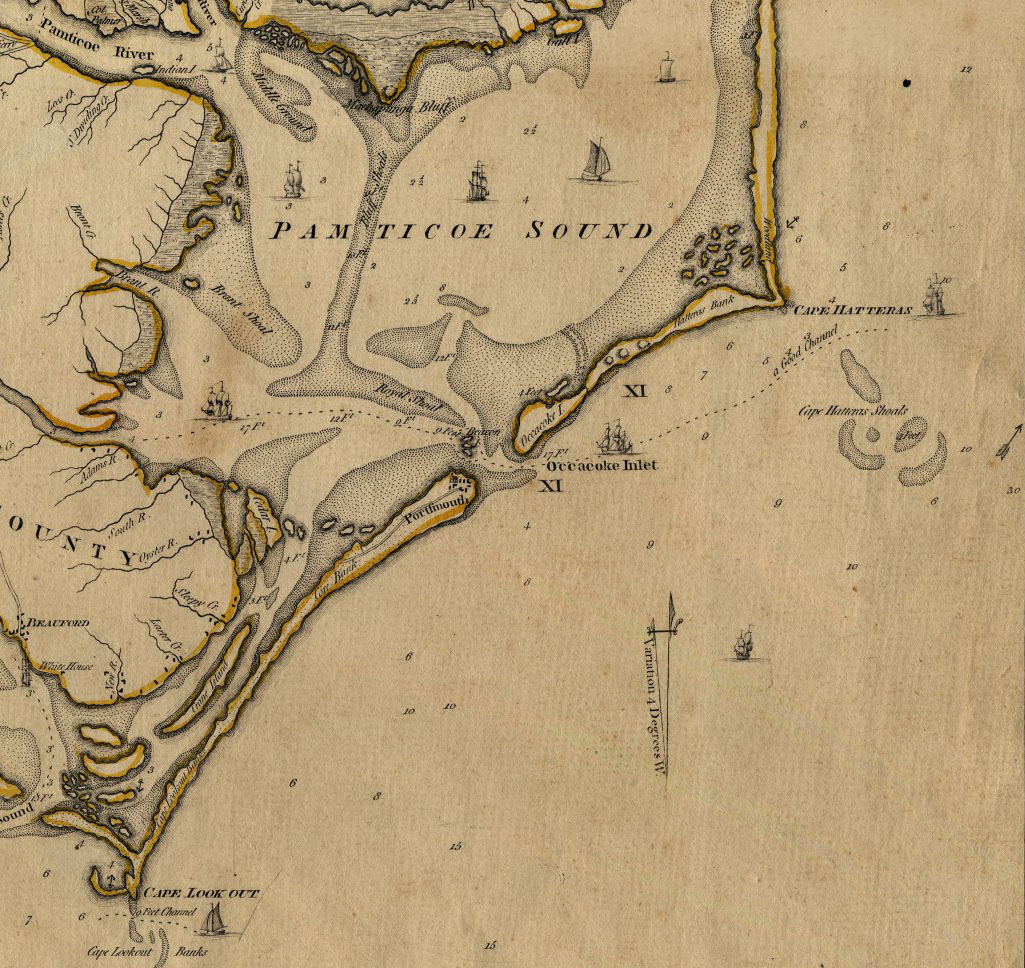
Ocracoke Inlet is not deep water. That is the whole point of it.
The channels shift with the weather and the bottom comes up where the charts say it should not. Anything with real draft finds the sand. For a man being hunted by the Royal Navy in 1718, that was not an inconvenience. It was the defense.
Blackbeard had taken a pardon and was living at Bath, on the Pamlico, and spending time anchored off Ocracoke. Governor Spotswood of Virginia wanted him taken, and Spotswood had warships. What he did not have was warships that could get in.
John Lawson had sounded it in 1709 and put thirteen feet of water on the bar at low tide. Enough for a sloop. Not enough for anything the Royal Navy would send after a man like this.
So he paid for two small sloops instead, put a Royal Navy lieutenant named Robert Maynard in command, and sent them down the coast.
The Fight, and Why the Water Decided It
Maynard came into the inlet on the morning of November 22 and ran aground almost immediately, which was the price of coming in at all.
What he did next is the part that reads like fiction and is not. He put most of his men below deck and left the sloop looking nearly empty. Blackbeard came alongside, saw a thin crew and an easy boarding, and went over the rail into a hold full of waiting men.
The fight was close work and it was brief.
The accounts say Blackbeard took a great many wounds before he went down, and they give numbers. Those numbers come to us through a book published six years later, and they have the shape of numbers that grow in the telling, so take them as the story the period wanted rather than a tally anyone kept.
He died on a deck in shoal water, in a place he had chosen because no one could reach him there.
Where It Sits in the Books
Lost Voices: The Death of Blackbeard is narrated by Israel Hands, which means the death is told by someone who was not standing there when it happened.
That was the choice that made the book work. Most of what anyone knows about this man comes secondhand, through people with reasons, writing later. Putting the story in the mouth of a man who has to piece it together from what reached him is not a device. It is just an honest version of how the record actually arrives.
From the Inlet One Legend, One Fact
The Legend
They say that when it was over they threw Blackbeard’s body over the side, and that it swam. Around the sloop once, or three times, or seven, depending on who is telling it, before it finally went under. The story has been repeated on that coast for three hundred years and it gets told as something close to fact.
The Fact
They took the head.
Maynard cut it off and hung it from the bowsprit, and not as a trophy. Everyone on that expedition understood there was money in killing this man, and money does not change hands on a sentence. A lieutenant could sail home and say he had done it. The head was the receipt.
He carried it up the coast hanging off the front of the sloop so that every port he passed could see it, and that was not theater either. It was advertisement, and it worked.
The timing is the part nobody mentions. Virginia’s assembly did not pass the act that set the reward until November 24, two days after Teach was dead and the head was already on the bowsprit. Maynard sailed home carrying proof for a law that had not been written yet.
The body went into the water at Ocracoke and nobody wrote down what became of it. What happened to the head is where the record goes soft. It was displayed, and there is a place at the mouth of the Hampton River still carrying a name that remembers it. Past that the accounts disagree and the stories get strange.
A man can be killed in front of dozens of witnesses in a known place on a known morning, and three hundred years later the one thing everybody is sure of is the part that did not happen.
The deposition puzzle. Seventy-six of you found all three errors. The trial was at Williamsburg and not Bath, the records of it are gone rather than sitting in the Virginia archives, and Maynard was sent by Spotswood of Virginia and not by the governor of North Carolina.
Three signed hardcovers of The Death of Blackbeard, drawn at random from the correct answers. Robert Mathews, Mike Hols and Sunne.
PS
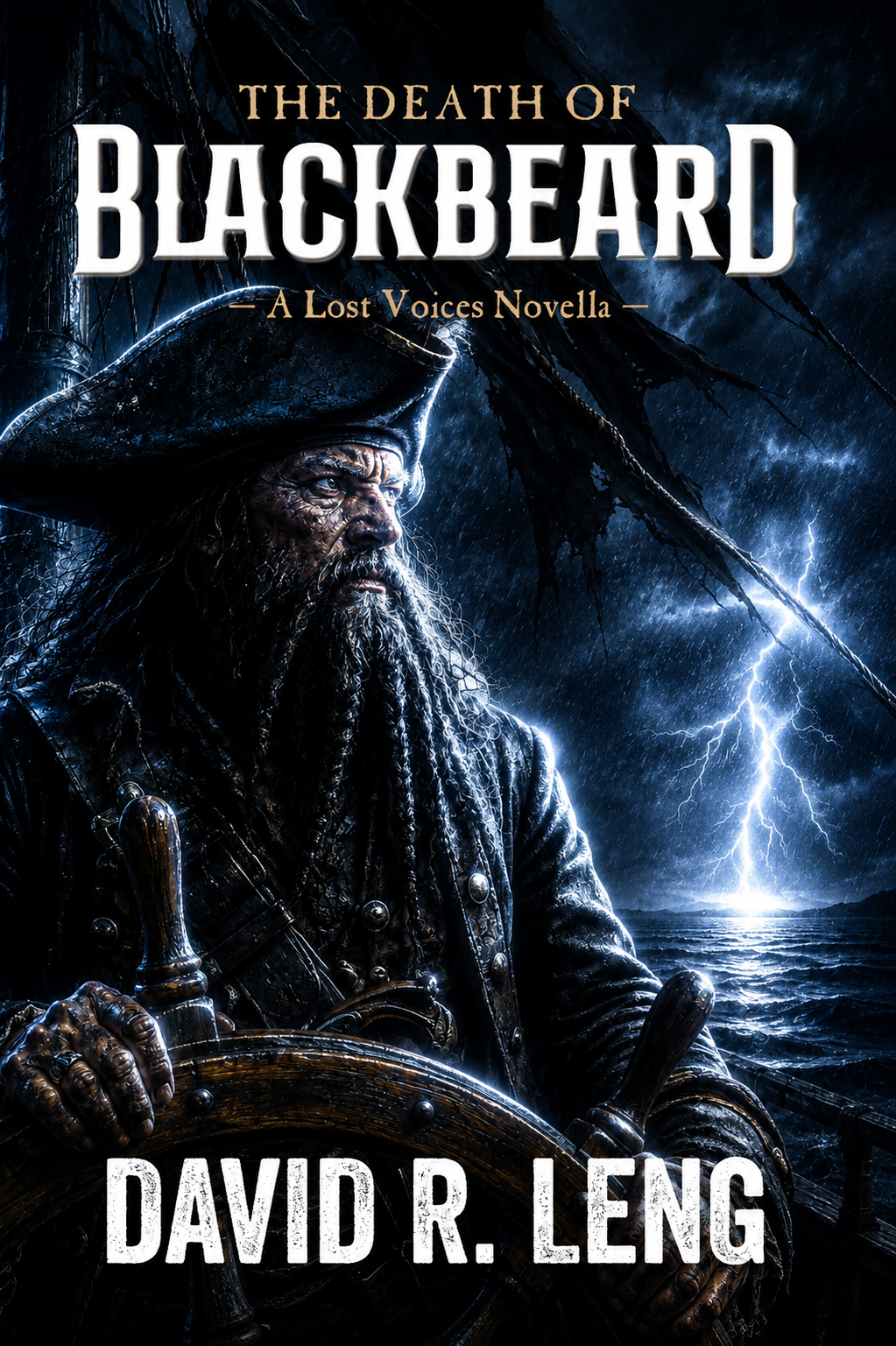
Lost Voices: The Death of Blackbeard has been out a month. If you have read it, a rating takes one tap and a sentence or two helps more than I can explain. Reviews are the whole engine for an independent author, and every one of them puts the book in front of someone who would not otherwise find it.
And if you have not read it yet, it is a hundred pages and it is free on Kindle Unlimited.
And one more thing. Book four is finished and it comes out in February. Echoes of Fortune: The Obsidian Covenant starts in 1541 with a Spanish friar being handed something he is told not to write down, and ends a long way from there.
I am putting together a small list of readers who want to know about it first. Early looks, the cover before it goes public, and the chance to read it before anyone else does.
The Only Words He Left
Everything you have ever read in Blackbeard’s own voice comes out of one paragraph, in one book, printed six years after he died.
The author called himself Captain Charles Johnson. Nobody has ever established who he actually was. In 1724 he published what he said were entries out of Blackbeard’s own journal, taken off the sloop along with everything else aboard it.
Rum all out… A damn’d Confusion amongst us! Rogues a plotting, great Talk of Separation.
Captain Charles Johnson, A General History of the Pyrates, 1724
It goes on from there. He looks sharp for a prize, takes one with a good deal of liquor aboard, keeps the company hot, and everything settles down again.
That is the whole of it. A few lines of a dead man’s handwriting, quoted by a writer who would not give his real name, out of a book that has never been seen since.
The message below is what I think the honest position on that journal is. Three words out of the quotation will open it.
InterceptedEIANP SOMXM YDPCZ ROVVX FHPUC OKEUX
Three words, from the journal entry above.
Stuck?
Three words, and they are the first three in the quotation. What he wrote down when the drink ran out. If the key is wrong the message stays gibberish. When it is right it reads in plain English.
The prize. One reader who sends the decoded line gets their name onto a page of Roanoke: The Lost Colony, drawn at random from the correct answers. A real person in the scene rather than a line of dialogue, and I will tell you which page it lands on. Replies close Friday November 20. The winner gets an email from me asking for a mailing address, so you know that one is coming and that it is me.
Israel Hands is the only man who sailed beside him and lived to be asked about it afterward. That is the entire reason Lost Voices is narrated by him and not by somebody with a better reputation.
Another one next time?
A cipher takes a while to build and I would rather know than guess. One click, and it opens in a new tab so you keep your place.
Send this to someone
If you know somebody who would enjoy this one, this page is public and needs no signup.
Someone forward this to you?
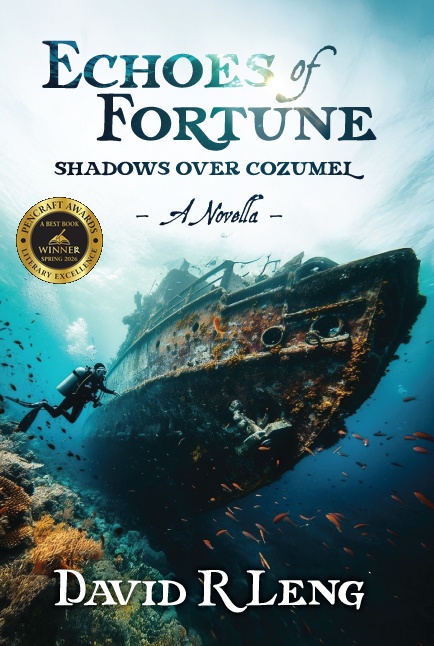
Start with Shadows Over Cozumel, free. A wreck off the Mexican coast that should not exist and a dive team that finds it before they understand what they are standing on.
The dispatches come with it.
From Other Authors
Four this issue. The descriptions are all mine and they are factual rather than recommendations, so you can decide for yourself whether any of them is your kind of thing.
Beneath Suspicion by T.L. Markham
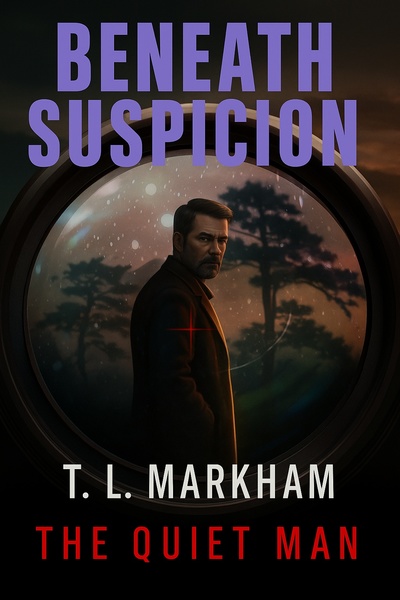
A vigilante thriller, which is not something this section has carried before. Free, and it is the finished book rather than a sample. Twelve chapters.
Myrtle Beach, off season. Sean Evans runs a veterinary clinic, drives a 1995 F-250 with reinforced panels under the rust, and checks his own door hinges every morning before he drinks any coffee. He was a sniper in Afghanistan. The town does not know that part. They call him the quiet man and they mean it kindly.
Two streets over, a detective named Harper Wells is crouched behind a strip mall looking at a body that has been arranged to read as a suicide. Wallet set on the chest like a headstone. Her chief turns up, tells her to bag it and tag it, and that is supposed to be the end of it.
And in a dark room somewhere a man called Jax is sorting photographs into warm faces and cold ones. Warm is the people who do not know him. He knew Sean in Afghanistan, and he has been patient about it since.
Markham writes it first person and present tense, with the narrator changing every chapter. Not how I do it. Worth knowing going in so the first switch does not throw you.
Three more, and shorter.
Silent Knight by Steven Moore
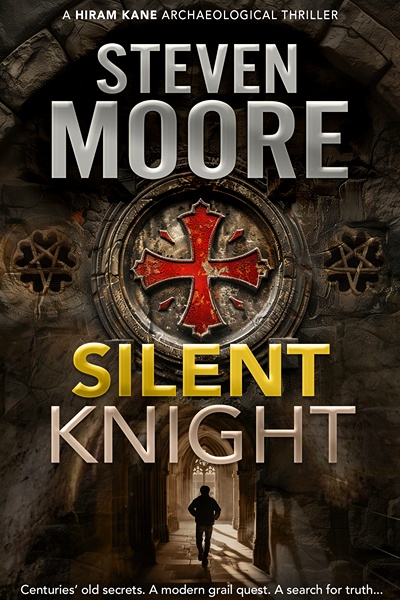
An archaeological thriller, and the origin story for his Hiram Kane series. Free.
It opens in January 1308, in a cave system under a field in Shropshire, with six Knights Templar working out what to do about an order being dismantled around them. Then it jumps six hundred and eighty-six years, and somebody goes looking for what they left behind.
The caves are real. Caynton Caves, in Shropshire, reached by a hole in a farmer’s field, and whether the Templars ever set foot in them has been argued over for years. A historian in the local paper says likely. A good deal of evidence says nineteenth-century folly. Nobody has settled it, which is the kind of gap I tend to write into.
Moore has a degree in archaeology and a habit of setting his books only in places he has actually been. Sixty-odd countries, five continents. It shows.
I Took Care of It by Paige Monroe

Paige Monroe writes domestic psychological suspense, which is about as far from Braddock’s road as this section gets. No history, nothing buried, no water. I Took Care of It happens in school pickup lines and group chats.
Erin Pruitt has spent years being the person who handles things for everybody. One flash of anger, one quiet correction, and it works better than she expected it to. Then the corrections start getting away from her, a friend is ruined, and a detective starts asking questions. In Monroe’s words, she handled it and someone else took it too far.
If you read thrillers for the feeling that something is wrong underneath an ordinary surface, that part will be familiar. The surface is a suburb instead of a battlefield.
Frontier Ghosts by Michael Cardwell

Cardwell was in this section back in September with Frontier Justice, the first Danny Coogan book. This is the sixth. Coogan has traded the Fish and Game badge for a Deputy Marshal’s star.
It opens on an eviction in mid-March, on the Dead Horse Reservation in Montana. A drunk squatter with a deer rifle, two Tribal Police officers, and a notice nobody intends to accept quietly. Coogan puts a shoulder into the man, the floorboards give out, and the pair of them land in the crawlspace. That is where he finds the skull.
Three sets of remains under that house. Down there years rather than months, nothing left but bone. One of them still wearing a medicine bag on a leather cord.
What the book is actually about turns up a page later, when somebody asks whether it is worth checking reservation missing persons. The list is long. Longer than people realize. And that is only counting the ones anybody reported.
Different country from mine and a different kind of crime. Underneath it is the same thing I keep writing into: something buried a long while, and the question of who decided not to go looking.
Until next time, keep hunting.
David R Leng
Echoes of Fortune. The Past Refuses to Stay Buried… It Echoes into the Present.