Last month’s winner. Two hundred and seventy-six of you sent in a correct answer to the Poe cipher, which is a great deal more than I expected and considerably more than I would have managed in a fortnight. I put every entry into a spreadsheet, 1 to 276, and had AI pick the winning number.
Joe McHenry. There will be a Joe McHenry in Echoes of Fortune: The Obsidian Covenant, and he has a part with dialogue. That is all I am going to say about his fate.
The Rock Nobody Can Explain
Everybody knows what it looks like.
It has been on a postage stamp and in a Spielberg film and on the cover of more Wyoming tourism brochures than anyone could count. Eight hundred and sixty-seven feet of grey-green rock standing alone above the Belle Fourche River, sided in enormous vertical columns like something assembled rather than formed.
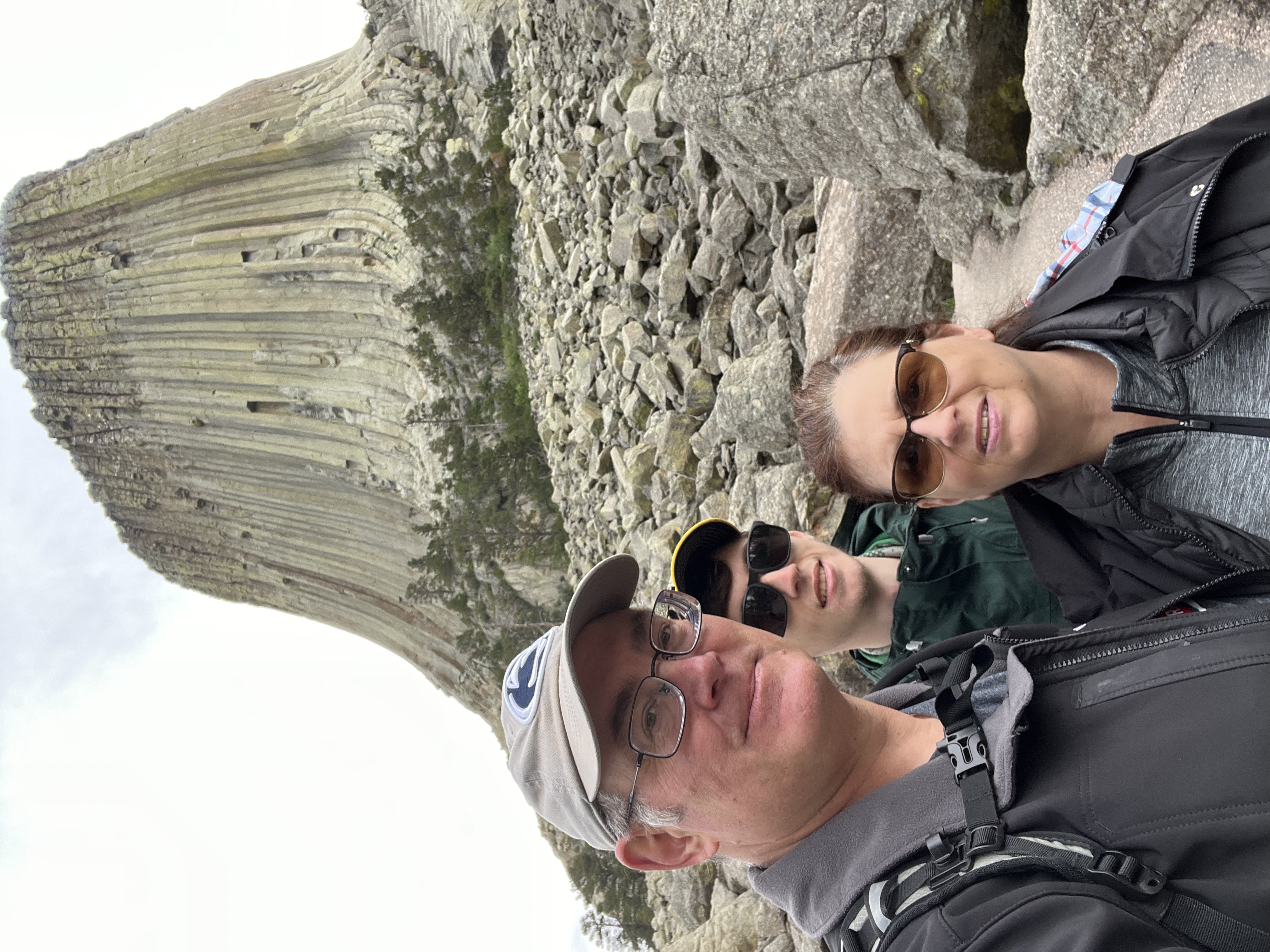
What almost nobody knows is that geologists have been arguing about how it got there since the 1880s, and they have not finished.
The rock itself is not in dispute. It is phonolite porphyry, intruded roughly forty million years ago, cooled slowly enough to crack into those columns. Mostly hexagonal, though some have four sides and some have seven.
The argument is about what shape it was before erosion got to it.
Carpenter and Russell studied it in the late nineteenth century and concluded it was an igneous intrusion. In 1907 Darton and O'Harra decided it must be the eroded remnant of a laccolith, a mass of rock that pushed up between sedimentary layers without ever reaching the surface. Others have argued it is a volcanic plug, the neck of a mountain that eroded away around it.
Here is the problem with that last one. There is no volcanic ash anywhere in the surrounding countryside. No lava flows. No volcanic debris. If a volcano stood there, it left nothing behind but the rock in its throat.
More recent work has suggested something different again, that the Tower is what remains of a lava lake that filled the crater of a volcano, which would mean the thing we are looking at was never underground at all.
Four theories, a hundred and forty years, and a federal survey that says plainly that no conclusive proof can be presented.
I have been reading about that argument for the better part of a year, which is probably a longer answer than the question deserves. But there is something I keep coming back to. The columns are not carved. Nobody put them there. They are what happens when that particular rock cools at that particular rate, which is to say the shape was inevitable the moment the conditions were set.
The geometry was decided before anyone was there to see it.
That is a thought I have not been able to put down.
From the Rails One Legend, One Fact
In February 1861 Abraham Lincoln was riding a slow chain of trains east from Springfield to his inauguration in Washington.
Seven states had already left the Union. His route passed through Baltimore, a slave-holding city where he had lost every ward the previous November, and where the trains from the north did not connect to the trains going south. A passenger changing lines had to cross a mile of city between Calvert Street station and Camden Street station in a carriage.
The Legend
A group of Baltimore secessionists had a plan for the moment Lincoln's train stopped. They would take him in the mile between the two stations, before he could reach the second train. That was where they meant to kill him.
Allan Pinkerton, the railroad detective, had been hired by the Philadelphia line to look out for sabotage on the tracks. His agents worked undercover in Baltimore in the weeks before the inauguration. One of them was Kate Warne, the first woman detective in America, who moved through drawing rooms where his male agents could not. What they came back with was the plot. The National Park Service records it as the work of the Knights of the Golden Circle. Other accounts describe Baltimore secessionists more broadly, led by a barber named Cypriano Ferrandini. The literature does not entirely agree on who exactly ran it.
The Fact
That is where the record becomes cleaner. Pinkerton went to Lincoln in Philadelphia and laid out what his agents had found. Lincoln listened, kept his public schedule as far as Harrisburg, then cut the telegraph wires, boarded a private car with Pinkerton and Ward Hill Lamon, and rode a special train back through Philadelphia and down through Baltimore in the middle of the night. He arrived in Washington around three thirty in the morning of February 23, ahead of the daylight schedule the plotters had built their plan around.
Whether the plot itself was as dramatic as Pinkerton later claimed is genuinely debated. The main source is a book Pinkerton published in 1883, twenty-two years after the fact, when he had every reason to remember his own role generously. What is not debated is what Lincoln did with what he was told. The president-elect of the United States believed the threat was serious enough to slip through Baltimore in the dead of night rather than ride through it in daylight. That belief is on the record. So is the ride.
That much is on the record. Where the Knights went from there, and how far their reach ran, is the story I built Knights of the Golden Circle around.
Find the Three Things He Got Wrong and Win
In 1721 Israel Hands stood in a Williamsburg court and gave an account of his time aboard Blackbeard's ship. He was on trial for piracy. What he said kept him off a rope.
Below is his testimony, set against the ship's log for the same days. They do not agree. Find the three places where they contradict each other, tick them, and you have solved it.
Win an Early Copy
Five readers who find all three contradictions will have Lost Voices: The Death of Blackbeard sent to them before it goes on sale.
Solve the puzzle below and the page gives you a code. Send it to me and you are entered.
Replies close October 5. Drawn at random from the correct answers.
Two of them are about what he denies. One is about when.
You have it. He lied about the dates, the prisoners, and his own knee.
All three would have hanged him if the court had pressed. Nobody did.
Send me this and you are entered:
Five readers who reply get an early copy of The Death of Blackbeard, sent before it goes on sale on October 13. Replies close October 5. Drawn at random from the correct answers.
The testimony and log above are constructed for the puzzle. The events behind them are documented.
Out October 13
Lost Voices: The Death of Blackbeard publishes on October 13.
It is not an Echoes of Fortune book. Lost Voices is a separate line, standalone historical novellas, quieter, with no present-day chase and no clock running down. Each one gives the account back to somebody the record erased.
This one runs about fifteen thousand words, so it is a single sitting. Israel Hands narrates it, which is why the puzzle above is what it is.
Some histories do not threaten. They simply wait to be heard.
For readers who finished Knights
There is a scene that was cut from Knights of the Golden Circle. The night they hid the stealth boat, seen from the deck of the ship that took it aboard.
It gives away a large part of the climax, so it sits behind a gate. If you have not finished the book, leave it alone. It will keep.
Send this to someone
If you know somebody who would enjoy the rock nobody can explain, or Israel Hands lying under oath, this page is public and needs no signup.
Someone forward this to you?
Shadows Over Cozumel is a complete novella and it is free. A Confederate blockade runner that vanished in 1865, found on the seafloor off Mexico by people who should have left it alone. The dispatches come with it, every few weeks, and you can leave whenever you like.
From Another Author
One this month. I read the opening. The description is mine and factual rather than a recommendation, so decide for yourself.
Frontier Justice by Michael Cardwell
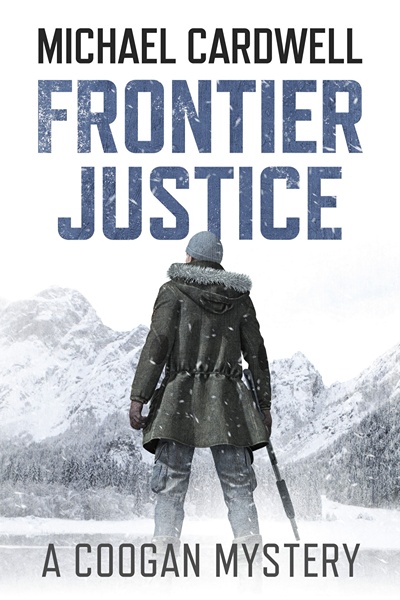
A probationary game warden in a Montana county with no highways, no towns, and five rivers cutting it into pieces. Winter has arrived early and hard. Danny Coogan is two years out of Afghanistan and wanted a job where nobody's life depended on him, which is working fine until a rancher reports a carcass on posted land and a man with a rifle on the ridgeline.
The country is the real draw. The county is named for James Beckwourth, born into slavery in Virginia, mountain man, fur trader, and for a time a war chief in the Crow Nation. Cardwell knows that ground and it shows.
Until next time, keep hunting.
David R Leng
Echoes of Fortune. The Past Refuses to Stay Buried… It Echoes into the Present.